Best Low-Light Indoor Plants for Dark UK Flats: A Comparison
Every winter, the same question comes up: which houseplant will survive a north-facing flat with sash windows, a radiator under the sill and about four hours of grey light a day? No plant enjoys permanent gloom, but a handful tolerate it far better than the rest — and they tend to be the ones that evolved on forest floors beneath a dense canopy.
What follows is a comparison for UK flats: what each plant needs, how it copes with dry centrally heated air, and whether it is safe around cats and dogs.
Work out your light before you buy
"Low light" in a plant catalogue usually means something quite specific: enough daylight to read a newspaper by, but no direct sun. A windowless internal bathroom or a hallway with no daylight at all is a different problem, and most plants — even the tough ones — will sulk and eventually fail there.
Try this before spending anything:
- Note which way your main window faces. North and east windows give the gentlest light; a north window is the classic spot for shade-lovers.
- Check how far the light travels. Levels drop off quickly within a metre or two of glass, so a plant tucked into a corner three metres back is in deep shade.
- Use the shadow test at midday. A sharp, defined shadow means bright light; a soft, blurry one means medium; no shadow at all means low.
- Account for obstructions. Net curtains, blinds, neighbouring buildings and the low angle of a British winter sun all knock light levels down further.
If a spot fails the shadow test entirely and never receives daylight, change the position rather than the plant.
The reliable performers, compared
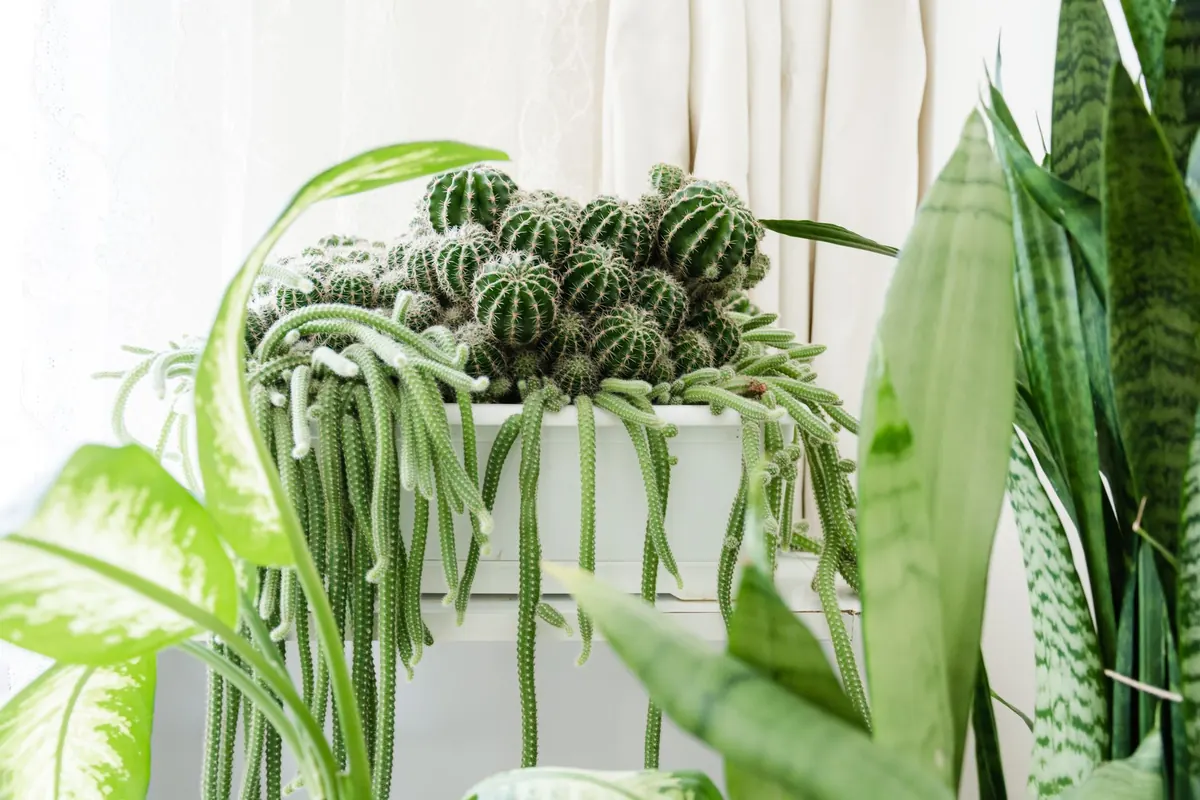
Snake plant (Dracaena trifasciata)
Probably the most forgiving plant on this list. Thick, upright leaves store water, so it copes with a missed fortnight and dry air without complaint. It tolerates low light but grows slowly there; a brighter spot speeds it up. Water sparingly — every two to three weeks in summer, less in winter — and never let it sit in a full saucer. Toxic to cats and dogs.
ZZ plant (Zamioculcas zamiifolia)
Glossy, waxy leaves and underground rhizomes make this one drought-proof. It genuinely manages in a dim corner, though it looks better with a little indirect light. Let the compost dry out completely between waterings; overwatering is the only reliable way to kill it. Toxic to pets.
Cast iron plant (Aspidistra elatior)
A Victorian favourite that earned its name. It shrugs off shade, draughts and neglect, and is one of the few large-leaved plants that will sit happily in a dark hallway. Growth is slow, so buy the size you want. Average humidity is fine. Pet-safe.
Spider plant (Chlorophytum comosum)
Cheerful, inexpensive and endlessly forgiving. It prefers medium light but tolerates low, and it throws out baby plantlets you can pot up for free. Keep it out of direct sun, which scorches the leaves. Listed as non-toxic to cats and dogs, though cats that nibble the leaves may be sick afterwards.
Parlour palm (Chamaedorea elegans)
Small, upright and slow, which suits a shelf or the corner of a compact flat. It wants a little more humidity than a snake plant, so mist it or group it with other plants. Pet-safe.
Prayer plants, peace lilies and Chinese evergreens
Calatheas and aglaonemas cope with low light but are fussier about water quality and humidity — rainwater or filtered water helps, and brown edges usually signal dry air. Calathea is pet-safe; Aglaonema and peace lily are toxic. Pothos and philodendron also tolerate shade well, but both are toxic to pets.
Care differences worth knowing
- Watering: in low light, plants use far less water. Stretch your usual schedule and check the top few centimetres of compost first.
- Feeding: little and rarely. Once a month in spring and summer is plenty; nothing in winter.
- Compost: a free-draining mix with grit or perlite. Root rot, not darkness, is the usual cause of death.
- Cleaning: dust blocks the light that is already scarce. Wipe leaves with a damp cloth monthly.
- Rotation: quarter-turn every few weeks so growth stays even.
Pet safety, in short
If you share a flat with a cat or dog, treat anything with milky sap as a risk. Pothos, philodendron, ZZ plant, snake plant, peace lily, dumb cane and aglaonema all fall into the caution group. Safer choices include cast iron plant, parlour palm, spider plant, Boston fern and most calatheas. If you suspect a pet has eaten something, ring your vet rather than waiting for symptoms to appear.
Humidity and heated flats
Radiators dry the air, and thin-leaved plants show it first: crisp brown tips on spider plants and palms, curling leaves on calatheas. Group plants together, stand pots on a tray of pebbles with water kept below the surface, or move them out of the direct path of heat. A bathroom with a window is excellent for ferns but a poor fit for snake plants and ZZ plants, which prefer to dry out completely.
Choosing for your flat
Match the plant to the room you actually have. A windowless internal bathroom suits nothing long term; a north-facing living room with a decent window suits almost everything here. If you can only manage one, a snake plant or a ZZ plant will forgive the most neglect. If pets come first, start with a cast iron plant, a parlour palm or a spider plant.
Buy small, water less than feels natural, and move a plant to a brighter spot for a fortnight if it starts stretching towards the window. That is usually all the diagnosis required.
Photo: Nadiye Odabaşı / Pexels