Fern Dormancy Explained: Why Outdoor Ferns Turn Brown in Winter
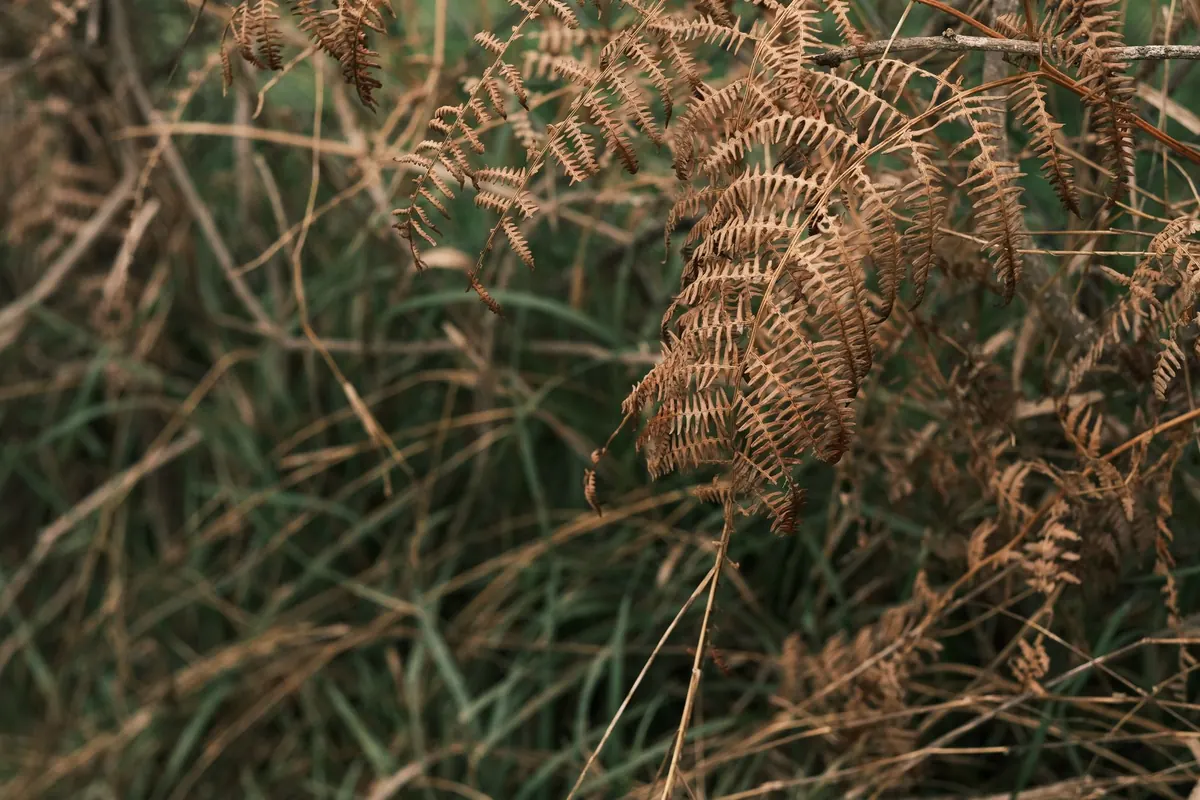
A brown fern in January is one of the most misread sights in the garden. The plant that unrolled crisp green croziers in May is now a heap of dry, rust-coloured fronds, and the instinct is to pull it out and start again. In most cases that would be a waste. Hardy ferns have been dropping their foliage through winter for a very long time, and brown is usually a sign that the plant is doing exactly what it should.
What follows is how dormancy works, which ferns lose their fronds and which hold on to them, what to cut and when, and how to tell a sleeping fern from a dead one.
What dormancy actually means for a fern
Ferns are ancient plants with an old-fashioned way of sitting out hard conditions. There is no woody framework to protect, no buds waiting on bare stems. The living heart of the plant is the crown: a short, thick rhizome sitting at or just below soil level, packed with stored starch. In winter, that crown is the fern. Everything above it is disposable.
As days shorten and the soil chills, a fern stops producing new fronds. Photosynthesis slows to the point where keeping a full canopy costs more than it earns, so the plant shuts down above ground and waits. Dormancy is not a single switch either, but a sliding scale. A fern in a mild coastal garden may barely pause; the same species in a frost pocket inland can vanish completely until April.
Deciduous, semi-evergreen and evergreen ferns
Knowing which group your fern belongs to tells you almost everything about what to do in late winter.
- Deciduous ferns lose every frond. Lady fern (Athyrium filix-femina), royal fern (Osmunda regalis), the ostrich or shuttlecock fern (Matteuccia struthiopteris) and Japanese painted fern (Athyrium niponicum var. pictum) all die back to the crown.
- Semi-evergreen ferns hold their fronds through mild weather but look increasingly ragged by February. Most Dryopteris — male fern and autumn fern among them — and soft shield fern (Polystichum setiferum) fall into this group.
- Evergreen ferns keep green fronds all winter, though older ones bruise, scorch and yellow. Hart's tongue fern (Asplenium scolopendrium), common polypody (Polypodium vulgare) and hard fern (Struthiopteris spicant) are the ones to rely on for winter structure.
Why the fronds turn brown
Two things happen at once, and neither is disease. First, cold soil slows water uptake through the roots while thin fronds carry on losing moisture on bright, windy days. The fern cannot replace what it loses, so it begins to withdraw mobile nutrients — nitrogen, magnesium — back into the rhizome for reuse in spring. Chlorophyll breaks down as that happens, and green gives way to yellow, then bronze, then brown.
Second, hard frost. Ice crystals form inside the leaf cells and puncture the walls, which is why frosted fronds turn black, papery and translucent. Ferns with thin, soft fronds suffer first. Leathery evergreens such as hart's tongue hold out longer, though winter sun on frozen ground will still scorch them from the edges inward.
That pattern — brown at the tips and margins, still green near the base — is classic winter damage, and it rarely means the plant is dying.
Which fronds to cut back, and when
The principle is simple: cut dead tissue, leave living tissue, and let the fern set the timetable.
Deciduous ferns
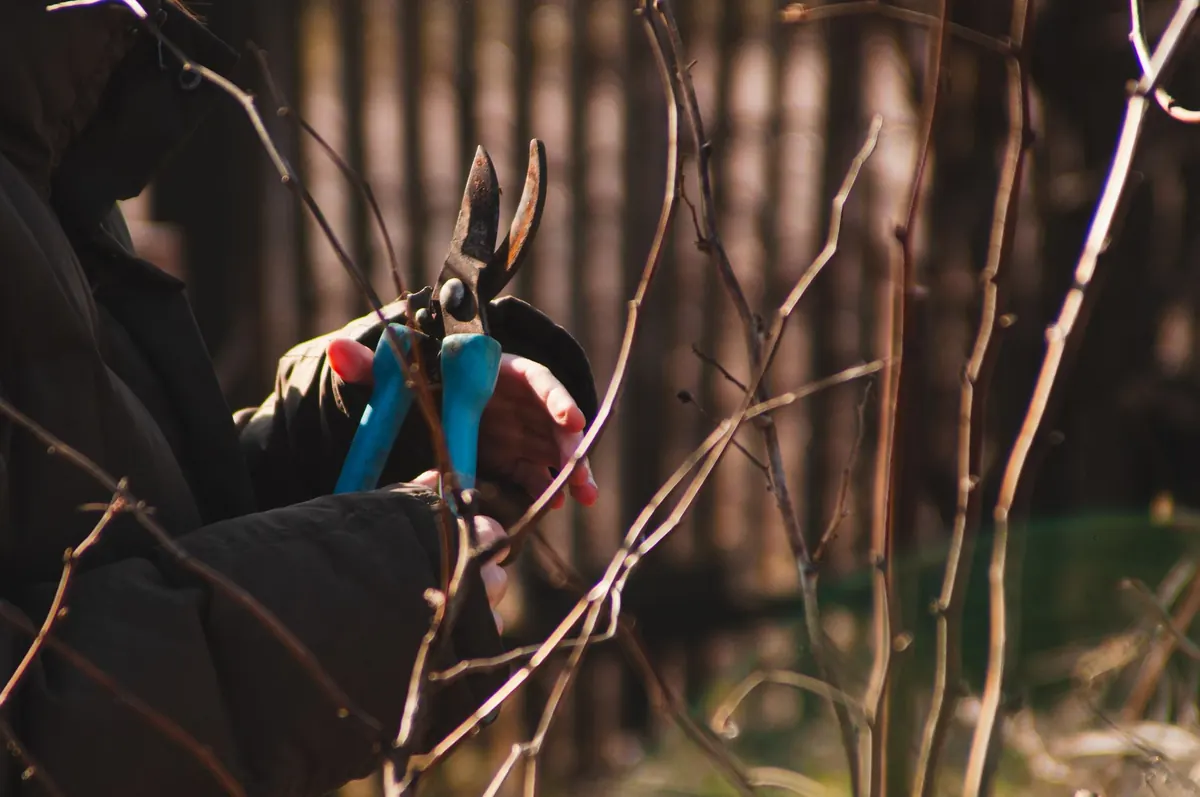
Leave the dead fronds in place over winter. They shelter the crown from hard frost and hide it from blackbirds scratching about in the border. Cut them down in late winter or early spring — February into early March across most of the UK — just as the new croziers start to show. Snip to 2–3cm above the crown with sharp secateurs. Never pull or tug, because a flaking rhizome damages easily. If you prefer a tidy border in November, cutting early will not usually kill the plant, but you do give up free insulation.
Evergreen ferns
Do not shear them. In spring, work through with secateurs and remove individual fronds that are brown, brittle or lying flat on the ground. A useful test: a living hart's tongue frond bends, a dead one snaps. Cut at the base, close to the crown, one frond at a time, and expect to take out perhaps a third of the old foliage on a large shield fern. New fronds will cover the gap by midsummer.
Ferns in pots
Same rules, with one addition: lift pots onto feet or bricks so they drain freely, and remove any saucer that collects rainwater. Winter wet kills more container ferns than frost ever does.
How to tell dormancy from death
Go by the crown, not the fronds. Scrape back the mulch and look at the growing point. Firm, pale green or creamy tissue that feels slightly damp means the fern is alive and simply resting. Soft, brown, slimy or black tissue that smells sour means rot, and the plant has almost certainly gone.
Two more checks are worth doing. A gentle tug on a frond: one that comes away with no resistance is dead, while one that resists is still attached to living tissue. And give it time — new croziers can appear as late as May after a cold spring, so do not clear the space before the end of that month.
If a fern in a pot collapses over winter, the culprit is often vine weevil rather than weather. Tip the compost out in spring and look for fat, white, C-shaped grubs curled around the roots.
What to do in spring: a short checklist
- Wait until you can see new croziers before cutting anything back hard.
- Mulch around the crown with leaf mould or composted bark — never over the growing point.
- Lift and divide congested clumps while the fronds are still low, if you want more plants.
- Fork grit or coarse compost into heavy clay around the crown to improve drainage.
- Start watering container ferns again as growth resumes, and give a weak liquid feed once fronds begin to unfurl.
- Leave the fresh fronds alone. They bruise easily, and a snapped crozier will not regrow this year.
Brown fronds in winter are a fern's way of waiting, not a verdict on your gardening. Check the crown, hold your nerve until spring, and the same plant will fill the gap with new growth.
Photo: Sami Aksu / Pexels