How to Water Indoor Plants While on Holiday: 7 Simple Methods
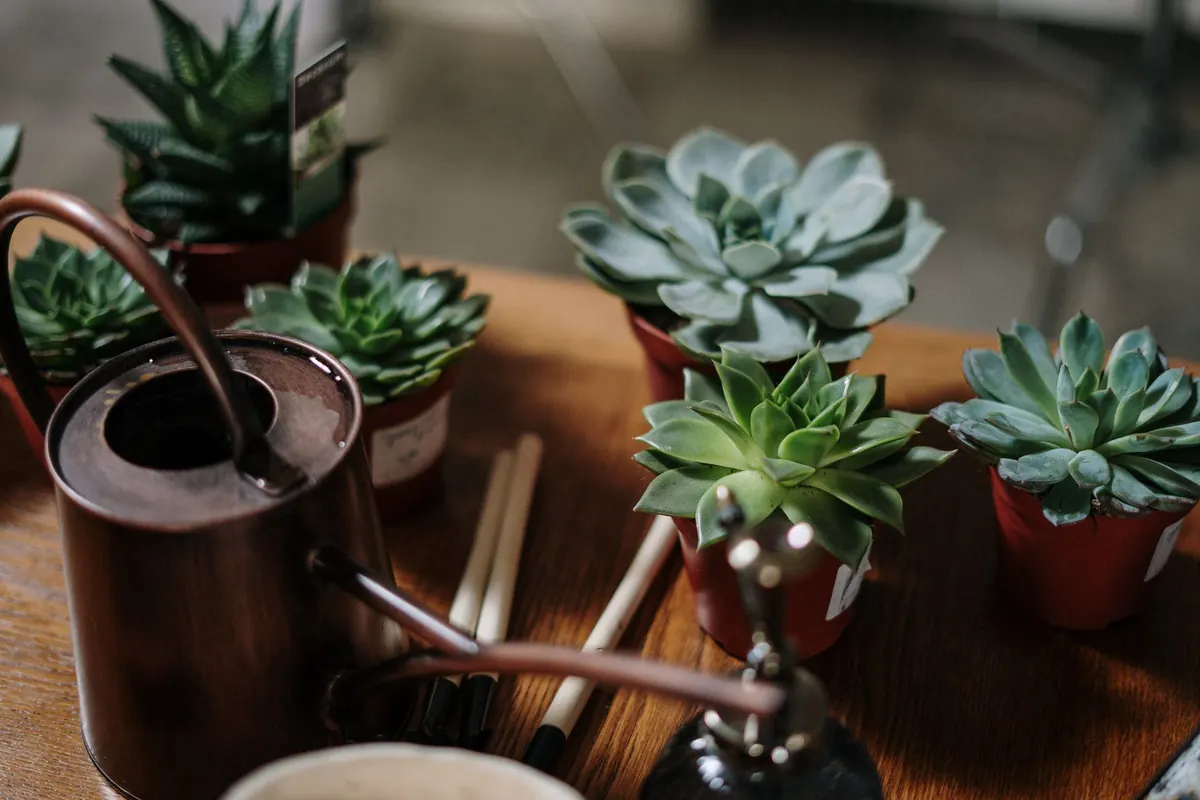
You water everything on Sunday morning, zip up the case, and then spend the week half-wondering whether the monstera by the window is quietly crisping. Most houseplants cope with a week without you, and plenty manage two. The trick isn't to flood every pot on your way out of the door — it's to slow down how quickly the compost dries while you're gone.
What follows are seven methods that genuinely work, from the barely-any-effort to a proper little DIY job, plus the timing details that decide whether they succeed or leave you with sour, sodden compost. None of them need a neighbour with a spare key, and most cost less than the plant they're protecting.
How Long Can They Really Last?
Before you choose a method, it helps to know roughly what you're working with. A mature snake plant in a 20cm pot of gritty compost can go four to six weeks in winter without a drop and barely notice. A maidenhair fern will be crunchy in three days. Most plants in a typical collection sit somewhere in the middle: a fortnight is comfortable, three weeks is a gamble, and a month needs a proper system rather than a favour.
Pot size and material matter as much as species. A small pot dries out far quicker than a large one because it holds less compost, which is why a 9cm cactus can be bone dry before a 30cm fern is even thinking about it. Unglazed terracotta breathes and loses moisture faster than glazed ceramic or plastic. And a plant that was already thirsty when you left will not magically be fine when you return.
Timing Does More of the Work Than Any Gadget
Water thoroughly the day before you leave, not on the way out. A slow, deep soak from the top, letting water run freely through the drainage holes, gives the whole rootball a chance to drink properly. Leave the pots somewhere warm and airy for a few hours, tip away whatever is still sitting in the saucers, then put them back.
Plants that leave the house dripping wet and pressed against a cold window are the ones that greet you a week later with yellow leaves and a faint whiff of rot. Damp compost in a warm, still room is fine. Damp compost in a sealed room with a saucer full of standing water is not.
Skip the plant food as well. Feeding before a trip pushes out soft, sappy growth at the exact moment nobody is there to keep up with the watering. Leave repotting, dividing and hard pruning for the week after you get back.
The Five-Minute Check Before You Go
- Test the compost. Push a finger about 3cm into each pot. If it still feels damp, leave that one alone — overwatering causes far more holiday casualties than underwatering.
- Empty every saucer. No plant wants to sit in an inch of stagnant water for ten days.
- Move them out of trouble. Away from radiators, hot south-facing glass and draughty doorways. Bright, indirect light is what you're after.
- Group them together. Clustered plants make their own humid pocket of air and dry out more slowly than a row of lonely pots on a shelf.
- Note who is thirsty and who is not. Ferns, calatheas, peace lilies and fittonias want help. Cacti, succulents, snake plants and ZZ plants would rather you did nothing at all.
Three Methods for a Week Away
1. The shallow-bath soak
Stand the pots on a folded towel in the bath, or in a large tray with 2–3cm of water in the bottom. As the compost dries, it draws moisture up through the drainage holes. For a week, this works beautifully for thirsty plants such as ferns and peace lilies. Don't use it for cacti, succulents or anything with fleshy roots — they will rot rather than thank you.
2. The inverted bottle drip
Fill a clean bottle with water, prick two or three small holes in the cap with a needle, and push the neck into the compost at an angle. Test it in the sink first, because hole size matters enormously: you want a slow drip that empties the bottle over roughly four to seven days. Too fast and you'll flood the pot. Too slow and it achieves nothing. A litre bottle will keep a medium pot gently topped up; a two-litre bottle is overkill for anything smaller than a floor-standing fig.
3. Group and shade
Bring the plants together in the brightest room that doesn't get direct midday sun. Moving a pot a metre back from the glass instead of pressing it against it can noticeably slow how fast the compost dries. If a heatwave is forecast, close the curtains during the day and open them again in the evening.
Four Methods for a Fortnight or Longer
4. Wick watering with cotton string
Cut a length of cotton string, thick yarn or an old shoelace. Drop one end into a jar of water, and bury the other about 5cm into the compost. Keep the reservoir level with, or slightly higher than, the pot so moisture travels steadily along the wick. Set it up a few days early and check that the compost stays lightly damp rather than soaked — if the pot is heavy and wet after two days, raise the jar or swap to a thinner string.
5. Capillary matting
Proper capillary matting, sold in garden centres, works on the same principle across a whole windowsill. Lay it in a tray with one end dipping into a reservoir of water, stand the pots on top, and the mat stays evenly damp. A thick folded towel or an old bath sheet does a decent impression if you'd rather not buy anything: run it along the bath with one end in standing water and stand the pots on the dry section. It's the least fiddly option for a large collection, because every plant drinks at its own pace.
6. Terracotta spikes and ollas
Unglazed terracotta seeps. Push a spike or a small buried olla into the compost, fill it with water, and moisture will slowly bleed out into the surrounding soil rather than dumping it all at once. These are the tidiest option on a windowsill and they suit plants that hate wet feet, because the compost around the spike stays evenly moist while the rest of the pot drains freely. Give them a rinse before use and check the water level every few days while you're still at home, so you know how fast yours empty.
7. The plastic bag humidity tent
For small, humidity-loving plants, a clear freezer bag does more than any watering device. Water the pot lightly, let it drain, then slip the whole thing inside a bag and seal it loosely — a couple of pencil holes stop it turning into a swamp. The plant sits in its own miniature greenhouse, transpiring and reabsorbing its own moisture. Keep the bag out of direct sun or you'll cook it. This is a rescue technique as much as a holiday one; it's also excellent for reviving a struggling calathea.
Nine times out of ten, a plant that looks dead after a holiday is not underwatered. It is sitting in cold, wet compost that never drained.
Coming Home: The First 48 Hours
What you do when you walk back through the door matters almost as much as what you did on the way out.
- Feel before you pour. Compost that looks dry on the surface is often damp an inch down. Water only the pots that need it.
- Cut the casualties. Yellow, mushy leaves won't recover, so remove them at the base and let the plant redirect its energy.
- Wait a week before feeding. Stressed roots can't take a rush of nutrients, and you'll only burn new growth.
- Shower the leaves. A lukewarm rinse in the sink clears dust and any pests that moved in while you were away, and most tropical plants visibly perk up within a day.
Do all of that and the worst you'll usually find is a slightly floppy peace lily, which will forgive you by the weekend.
Photo: cottonbro studio / Pexels